Outer Hebrides Itinerary: Everything You Need To Know To Plan The Perfect Trip
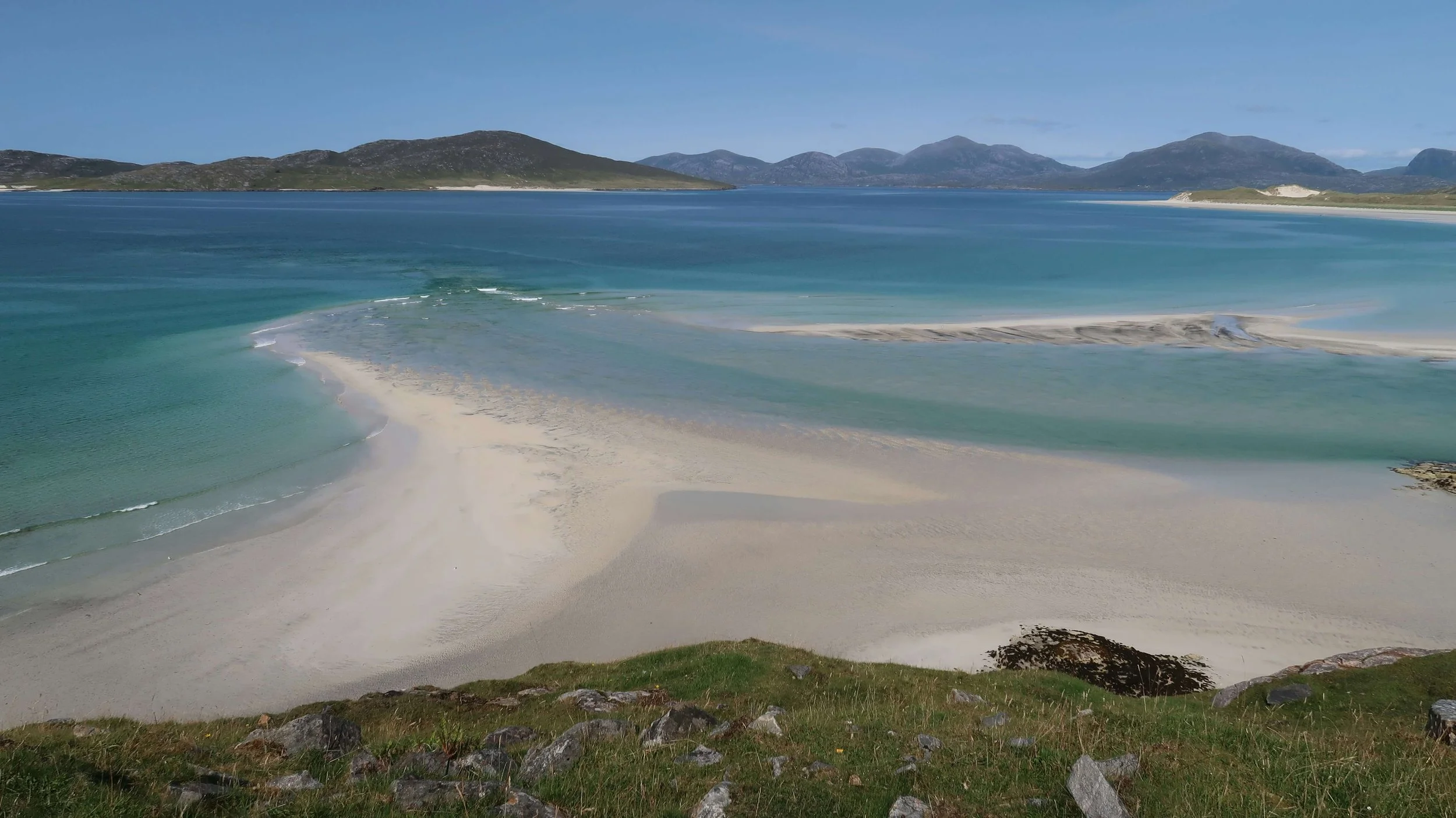
The Outer Hebrides are unlike anywhere else in Scotland. An endless chain of white-sand beaches, charming villages, spectacular scenery, and wild Atlantic coastline, they're one of my favourite places to explore and a wonderful addition to any Scottish Highlands road trip.
They're also one of the trickiest places in Scotland to plan.
Of all the road trips I've planned across the country, the Outer Hebrides took me the longest to get my head around. Between choosing which islands to visit, working out ferry routes, deciding where to start and finish, and figuring out how long to spend on each island, it's easy to feel overwhelmed before you've even booked anything.
The good news is that once you understand how the islands fit together, planning becomes much simpler.
Ready to explore Scotland like a local? Plan the perfect trip with our travel planning services.
If you're planning a trip to the Outer Hebrides, this itinerary will help you make the most of your time.
After several trips to the islands and helping countless travellers plan their own adventures, I've narrowed down a route that I think works particularly well for first-time visitors.
In this guide, I'll walk you through the route I'd recommend, the islands that are worth prioritising, how to choose the right ferry crossings, and how to put together an itinerary that makes the most of your time.
Need a Hand Planning Your Trip?
If you're finding the logistics a little overwhelming, you're not alone. The Outer Hebrides are one of the most rewarding - but complicated - trips to plan.
If you'd rather skip the hours of research, I offer personalised Scotland itinerary planning, helping you choose the best ferry routes, accommodation, driving itinerary and experiences based on the time you have available.
You can find out more about my itinerary planning services here.
Short on Time? Here's My Recommended Outer Hebrides Route:
If it's your first visit to the Outer Hebrides, I'd recommend focusing on Lewis & Harris and the Uists. They offer the best balance of spectacular scenery, beaches, history and wildlife, while keeping the driving and ferry logistics relatively straightforward.
This is also the route I recommend most often to clients. It gives you a brilliant introduction to the islands without feeling rushed, while still leaving plenty of reasons to return.
Outer Hebrides route overview:
Ullapool → Stornoway → Lewis & Harris (2 nights) → Leverburgh → Berneray → North Uist (2 nights) → Lochmaddy → Uig (Skye)
More Helpful Guides:
For more on the Outer Hebrides and plenty of local inspiration, don’t miss my detailed 4-day Outer Hebrides itinerary for suggested daily routes, my guide to the best things to do on Lewis & Harris, what to see on the Uists, detailed ferry guide, and my in-depth guide on where to stay in the Outer Hebrides for accommodation recommendations across the islands (coming soon).
Planning Your Outer Hebrides Itinerary
This is a comprehensive guide, so grab a cuppa and settle in! It should take around 10 minutes to read, but by the end you'll have everything you need to confidently plan your Outer Hebrides road trip.
If you're short on time, I've included a quick route overview above. Otherwise, keep reading as I walk you through everything from choosing which islands to visit and ferry routes to accommodation, transport and practical planning tips.
The Islands
One of the biggest misconceptions about the Outer Hebrides is that they're a collection of completely separate islands, each requiring its own ferry. While that's true for some, planning your route is far easier once you understand how the islands are connected.
Rather than thinking of the Outer Hebrides as 15 inhabited islands, I find it much easier to think of them as three distinct regions:
Lewis & Harris
Although they have different names, Lewis and Harris are actually one island, connected by a single road. This is where most first-time visitors spend the majority of their time, thanks to iconic sights like the Callanish Stones, Luskentyre Beach and the Butt of Lewis.
The Uists
The Uists are a chain of six islands connected by causeways, meaning you can drive between them without needing another ferry. This includes Berneray, North Uist, Grimsay, Benbecula, South Uist and Eriskay, making it easy to explore several islands while staying in just one or two places.
Barra
At the southern end of the archipelago lies Barra and its neighbouring island, Vatersay, which are connected by a causeway. Barra is famous for its unique beach airport, beautiful coastline and relaxed island atmosphere.
Thinking about the Outer Hebrides this way makes planning your itinerary much easier. Instead of trying to visit as many individual islands as possible, you can decide which of these three regions best fits the time you have available and build your route from there.
How many days should you spend in the Outer Hebrides?
The Outer Hebrides is one of those destinations where you could easily spend a week - or even longer - exploring every beach, village and hidden corner. But if you're visiting Scotland for the first time, I know that's not always realistic.
And while you can technically visit in three days, I think four nights is the sweet spot.
For most travellers, I'd recommend four nights. This gives you enough time to explore Lewis & Harris and the Uists at a relaxed pace, enjoy the scenic drives, and still have time for those spontaneous stops that make the islands so special.
If you have longer, I'd use the extra time to explore Barra or simply slow the pace down even further. The Outer Hebrides isn't somewhere to rush, and in my experience, the less you try to cram in, the more you'll enjoy it.
Getting to the Outer Hebrides
Ferries
One of the reasons planning a trip to the Outer Hebrides can feel a little overwhelming is the ferry network. Unlike many Scottish islands that have a single ferry terminal, the Outer Hebrides can be reached from several different ports on both the Scottish mainland and the Isle of Skye.
I definitely overthought this part of planning my first trip.
Looking back, it was actually much simpler than I'd convinced myself it would be. The biggest thing I learnt was to stop thinking about the ferry crossings and start thinking about the islands I wanted to visit. Once I'd decided that, choosing the right ferry route became much more obvious.
As a quick guide:
Lewis & Harris: Ullapool → Stornoway
North Uist: Uig (Skye) → Lochmaddy
Barra: Oban → Castlebay
If you're travelling with a car, I'd recommend booking your CalMac ferry as soon as you've confirmed your dates, as popular sailings can fill up surprisingly quickly during spring and summer.
For a more detailed breakdown of every route, including who each crossing is best suited to and the itinerary I'd recommend for first-time visitors, take a look at my complete Outer Hebrides ferry guide.
Flying to the Outer Hebrides
While most visitors reach the Outer Hebrides by ferry, flying is another option if you'd rather avoid the longer sea crossings.
Flights are operated by Loganair, with airports on Lewis (Stornoway), Benbecula and Barra. Regular services run from Glasgow, with some routes also operating from other Scottish airports depending on the season.
If you're concerned about spending several hours at sea, a good compromise is to fly into one of the islands and then use the shorter inter-island ferries, such as Leverburgh to Berneray or Eriskay to Barra.
These crossings are much shorter and generally more sheltered than the routes from the mainland.
Personally, I'd recommend taking the ferries if you can. Arriving by sea is all part of the Outer Hebrides experience, and watching the islands slowly emerge on the horizon is a pretty special way to begin your trip. Plus, ferries run far more frequently.
Hiring a Car for the Outer Hebrides
The easiest option for most visitors is to hire a car before reaching the islands. Edinburgh, Glasgow and Inverness all have a wide choice of rental companies, making it easy to include the Outer Hebrides as part of a wider Scotland road trip.
If you're travelling by foot, another option is to take the ferry to Stornoway and hire a car once you arrive. This can work well if you don't need a vehicle for the rest of your Scotland itinerary.
If you choose to rent a car in Stornoway, just be mindful of your ferry arrival time. Some sailings arrive after the rental offices have closed, so you may need to spend a night in Stornoway and collect your car the following morning.
Personally, I'd hire on the mainland if you're already planning a wider Scotland road trip. It gives you the flexibility to explore before and after the Outer Hebrides, and means you can simply drive straight off the ferry and start your island adventure.
Outer Hebrides By Public Transport
Yes, you absolutely can visit the Outer Hebrides without a car. If you're travelling around Scotland by train and bus, it's easy to reach the Outer Hebrides as a foot passenger.
The most popular public transport routes are:
Ullapool via bus from Inverness, connecting with the ferry to Stornoway.
Uig via bus from Glasgow via Fort William and Skye, connecting with the ferries to Harris or North Uist.
Oban via the bus from Glasgow, connecting with the ferry to Barra.
Mainland buses are run by either Citylink or Ember.
That said, if there's one piece of advice I can give, it's to hire a car if your budget allows.
In my experience, the Outer Hebrides are one of those destinations that are best explored with your own transport. While there are local bus services, they aren't designed for sightseeing, and many of the islands' best beaches, cafés, viewpoints and walking trails are difficult to reach without a car.
One of my favourite things about travelling around the Outer Hebrides is the freedom to stop whenever something catches your eye. Some of the best beaches I found weren't on my itinerary at all - they were simply places I spotted from the road and couldn't resist pulling over to explore.
Outer Hebrides Travel Tips Before You Go
Don't try to see everything
One of the biggest mistakes first-time visitors make is trying to tick off every island. Unless you have significant time to invest, we think that the Outer Hebrides reward slow travel. Spending longer in fewer places will allow you to experience the landscape properly rather than spending your trip constantly packing, unpacking and catching ferries.
Choosing your accommodation
Unlike mainland Scotland, the Outer Hebrides doesn't have endless accommodation options. You'll find a mix of guesthouses, B&Bs, self-catering cottages, small hotels, and a handful of luxury stays. It’s worth booking early, especially if you need specific dates or are travelling as a family.
See my ‘Where to Stay in the Outer Hebrides’ guide for my recommendations (coming soon).
Book ferries, accommodation & restaurants early
If there's one piece of advice I can give, it's to book everything as soon as you have your travel dates.
Don't underestimate how busy the Outer Hebrides can be, particularly from spring through autumn. Popular ferry crossings often sell out months in advance, and the best accommodation and restaurants can book up surprisingly quickly too.
Book your ferries and accommodation together
When planning your trip, I always recommend booking your ferries and accommodation at the same time.
Accommodation on the islands is relatively limited, while ferry sailings have a fixed number of vehicle spaces. Booking one without the other can leave you with accommodation you can't reach, or a ferry crossing that no longer fits your itinerary.
Planning them together helps ensure everything lines up from the outset.
When is the best time to visit the Outer Hebrides?
The best time to visit the Outer Hebrides is generally between April and September, when you have longer daylight hours, more frequent ferry services and the best chance of enjoying the beaches and coastal walks.
That said, each season has its own appeal. May and June bring quieter roads and beautiful spring colours, while September can be a wonderful time to visit with fewer crowds and a softer autumn light.
July and August offer the warmest weather, but this is also the busiest period, so booking ferries, accommodation and restaurants well in advance is essential.
In late autumn and winter, ferry routes change, sailings are fewer, and more likely to be affected by the wilder weather, and some cafes and accommodation close. That’s not to say you shouldn’t visit in the shoulder seasons; they are wonderfully quiet. Just be aware of the potential pitfalls.
What are the Outer Hebrides crossing like?
In all honesty, the longer ferry crossings to the islands can occasionally be rough. But I've had beautifully calm sailings that felt like crossing a loch, and others with a bit more swell; it really comes down to the weather on the day.
Ready to Plan Your Outer Hebrides Adventure?
The Outer Hebrides is one of Scotland's most unforgettable destinations. The challenge isn't deciding whether to visit - it's working out how to fit everything together!
With ferries, accommodation, island choices and driving routes to consider, I think a little planning goes a long way.
If you'd like help creating your own Outer Hebrides itinerary, my Scotland itinerary planning service can help you build a route that works for your travel style, interests and timeframe.
